Tuesday, 2 April 2013

My first podcast: Imperial Hackspace


For the most recent I, Science magazine on DIY Science, Josh Howgego and I went to London Hackspace for an evening of Biohacking. It was an eye opening experience, mainly because of diverse and interesting people who wanted to have a go at some molecular biology. We wrote about it for I, Science, see below.

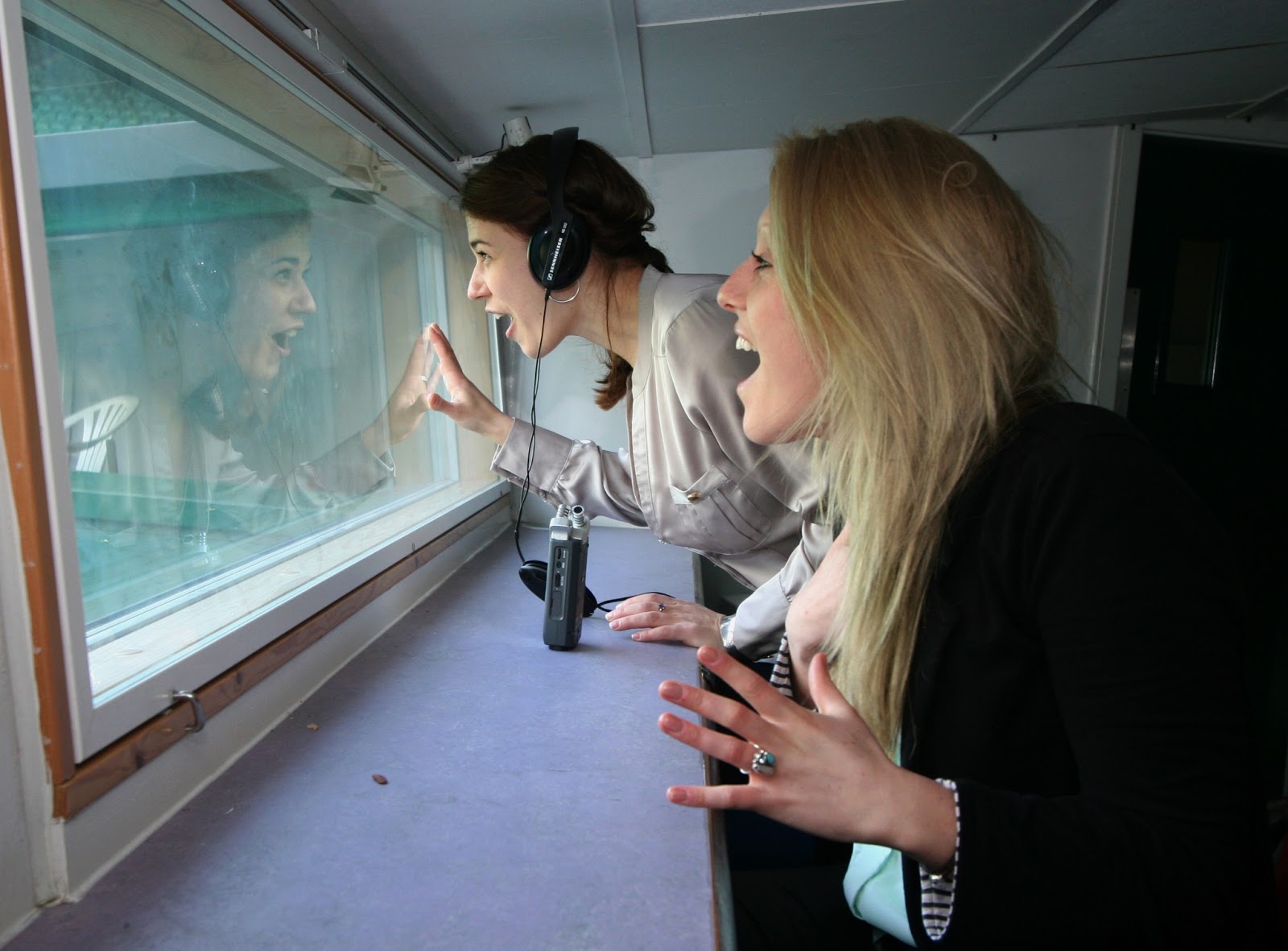
I found out soon after that there were plans for a Hackspaces in my own institution, which in many ways is shocking. Part of the idea of a Hackspace is to get away from constraints of an academic institution with its politics and funding issues, so that people with great ideas can work on individual projects without having to continually justify it. We are talking about a worldwide movement that has been critiqued it as anti-capitalist. So with initial plans at Imperial College London to form a Hackspace that would be integral to the university, I asked could an environment where the student has so much creative free rein have a place at Imperial College? I spoke to Professor Peter Childs and IC Design Collective to find out. Podcast was made for I, Science magazine

Monday, 1 April 2013

Wimbledon 2013, the Philosophers Battle

At the beginning of January our masters class were given our most daunting task yet: make a 'science communication product' about what we have taught you so far. Being an ambitious group we chose to make a product that discussed competing philosophies of science, an idea that could either go amazingly well or epically fail. 
Science has often been described as a game, with many rivalries, influences and champion theories. This is certainly the case for philosophy of science, which talks about what science is, what is scientific truth, if that even exists or is man-made, and how science should progress.  We wanted to explore an idea where competing philosophers knock an idea back and forth in a debate, just as you would a ball in tennis, until one of them won the point. As we developed the idea, our metaphor then became more abstract. The method the philosopher used to play tennis was influenced by the way they thought you should do science, and their ideas and what we knew of their histories influenced their personalities. The question essentially became: how would these philosophers behave if they played tennis as if it were science? So Karl Popper who believed in trying to falsify your own theories, was portrayed as argumentative, trying to falsify the rules of the game and the umpire. In the case of Aristotle, we knew little about his personality, so instead defined him by Francis Bacon's idea of him being the “dogma of the time”, therefore making him slow, thoughtful and consistent.

‘The Philosophers Battle’ was the kind of abstract idea that if executed wrong could be very difficult for the listener to understand. In our case this meant the script needed to be clear and the analogy needed to be portrayed in the correct way. The words used give sound effects meaning and paint an image in the listeners mind. My colleagues Annie and Julie (who also wrote about the project) did an impressive job of bringing the commentary to life by connoting the emotion and drama of a live match. By playing off each others characters and often taking opposing points of view so they were able to discuss the strengths and weaknesses of each approach. 
Meeting with Prof Steve Fuller was a highlight of the project. He was very enthusiastic about our concept having made stage productions of a similar kind before. He proved a great asset to the piece appearing in our play as our Philosophy Analyst where he brought the events of the match back to the philosophy and history of the characters.
Another big highlight of the project was being shown around Wimbledon by their Deputy Director of Broadcasting (!) that gave the opportunity to take the photographs featured in this post and later to develop my photoshoping skills to get them ready for our class presentation. 

We made a “live” radio commentary of a philosophy tennis tournament, with commentary on Aristotle versus Francis Bacon in the first match, followed by the events of Thomas Kuhn verus Karl Popper in the second. This is complemented by an expert analysis of each match by Professor Steve Fuller, a social epistemologist from Warwick University.

Wednesday, 16 January 2013

A Feast for the Sciences

As part of my 'extra-curricular' activity, I've been working with Imperial Fringe (as previously mentioned) and for the December event I was in charge of arranging a center piece. The event was all about the science behind food so we wanted something edible, attention grabbing and unexpected. 

In the season of gluttony what better than a Christmas dinner made out of cake! I spoke to the amazing Miss Cakehead, who created the deliciously gory Eat Your Heart Out, and she worked with Conjurers Kitchen to create the cakes. It was a brilliant success and was covered in The Huffington Post and Daily Mail Online. 


Wednesday, 21 November 2012

Secret at the Olympic Park


Loowatt: happy to take your shit.


Thinking about what happens to your sewage as you flush it away may not be the most invigorating thought after the daily deposit; but if you knew that thirty percent of the water entering your home leaves via the toilet, you may think twice about it. Three times when you consider you are throwing away a rich source of carbon and phosphorous, that could rival the best farmyard manure. The current system of mixing human waste with water is clearly not the most ecological or economic. The modern “flush and forget” mentality stems from an out dated 19th century invention to prevent the spread of diseases like cholera via our waterways, so sewers were built to run waste away from communities to the sea. Even in this age, sewage is treated then sent to sea, adding to the oceans phosphorus levels to the point of killing sea life.

The problem of human waste has been around for a long time, and the promising new ‘Loowatt’ system could be the answer to our prayers. This waterless toilet stores your excrement in a biodegradable film made from starch, within a cartridge you empty one to two times per week. So already we are moving away from the flush and forget state of mind, which I am sure many will take issue with, but if we can have food waste in our homes till we choose to remove it why not with our own waste? Even better the packaging system of Loowatt makes the smells of the waste unable to escape.

So you empty your cartridge every week into an anaerobic digester. The digester contains millions of microorganisms that live in an oxygen free environment. They break down the waste to gaseous products of methane (65%), carbon dioxide (33%) and other trace elements. Methane makes up a large part of the natural gas supplied to homes, and can also be used to generate electricity. The final by product of the anaerobic reaction is semi liquid manure which, though not sounding all too great, can easily be separated into plant food and rich fertiliser.  So these products from human waste can be useful resources. Trade your waste for useful biogas and fertiliser.

Inventor Virginia Gardiner’s vision was to take the Loowatt system to developing countries around the world to create a more sanitary way of dealing with waste.  The Loowatt financially beneficial to the community in providing fertiliser to be put back onto farmland and natural gas which once sold could contribute to economic stability within the community. Her and the Loowatt team have high hopes to transform the lives of people in developing countries, and being a part of a worldwide movement towards greener and more sustainable living.

An article I wrote for Ionic Magazine Issue 1 found here

Slightly naughty

when you don't update the blog for so long. Five screws fell out of my camera if that counts as an excuse. While I hunted down super small screws, my Canon was replaced with an iPhone, feels quite sacrilegious to post photos from that on here. But then again, an art teacher did once tell me to stop being so precious with my art, turned out to be good advice. Maybe I should apply the same here, so an instragram series:


Wednesday, 18 July 2012

Tuesday, 12 June 2012

Field Day 2012

This post is a little late. Field Day was on Saturday 2nd June, on "the most important weekend of our generation" according to Metronomy. Why they said that I don't not know. Because it was the diamond Jubilee weekend?(!) I hope not. Maybe because it marks the beginning of them making it big, which would make a bit more sense in terms of OUR generation.

For me it was a very important weekend because it was the first one after finishing my degree! I could finally BREATHE. Since then I have been busy with remembering what having a social life is like. Stand out bands for me were Friends, Metronomy and Beirut; the last of whom who I unfortunately didn't get any decent photos of.
FriendsFriends
Metronomy
Metronomy